
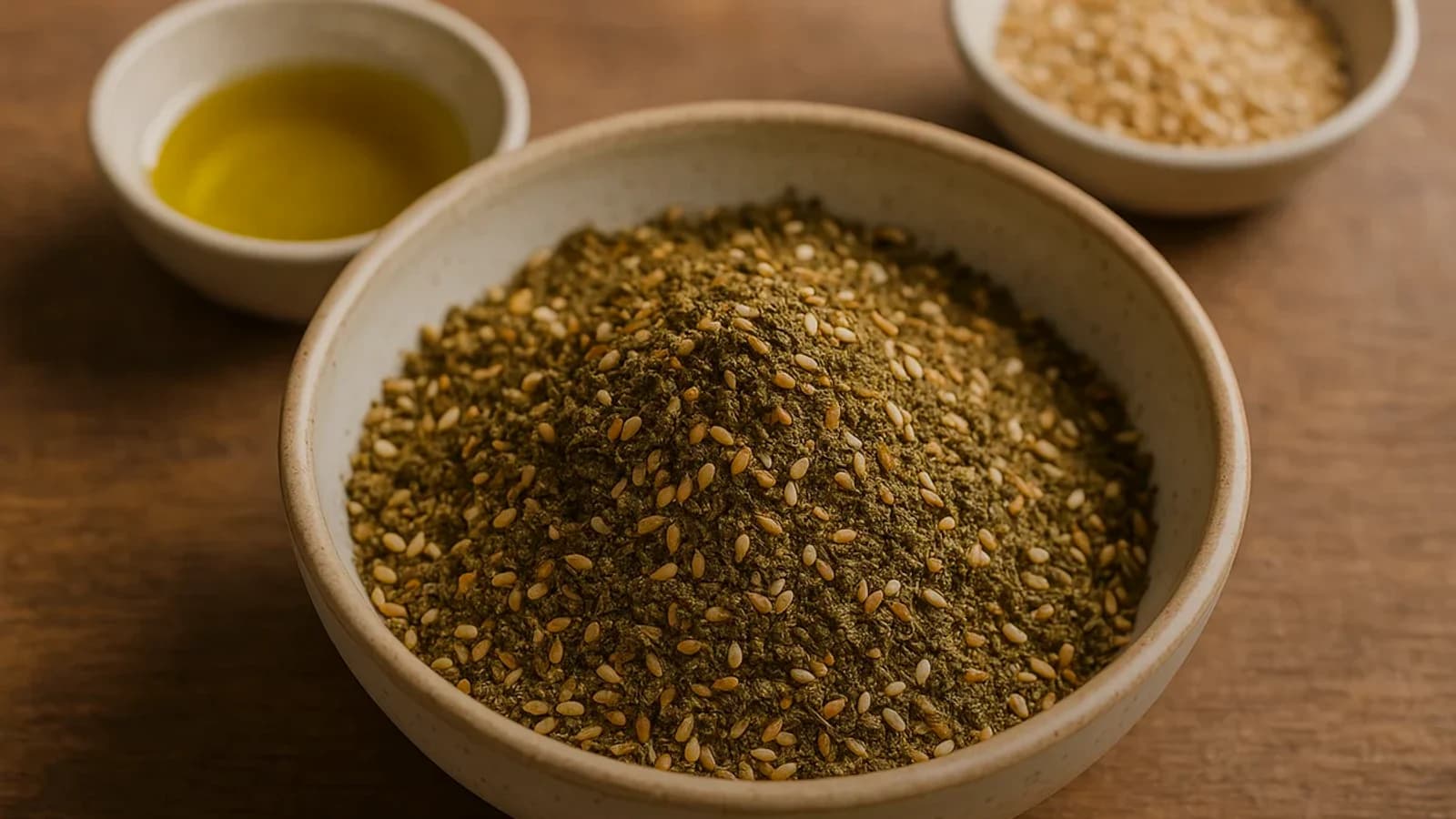
Zaatar is one of the most useful spice blends in Middle Eastern cooking. It is aromatic, earthy, tangy, and easy to use in both traditional recipes and quick weeknight meals.
For home cooks in Lincoln, zaatar is often the first spice blend that makes everyday food taste more complete without adding complicated prep.
If you have seen zaatar on a shelf but were not sure how to use it, this guide covers everything you need: what it is, how flavor works, how to cook with it, how much to use, how to store it, and where to buy quality blends locally.
What is zaatar?
Zaatar is a regional herb-and-spice blend usually built from:
- dried thyme-family herbs (sometimes oregano or marjoram)
- sesame seeds
- sumac
- salt
Different regions and brands change the ratios. One blend might be more herb-forward, while another is tangier or nuttier.
That variation is normal. The goal is not one universal formula. The goal is a balanced blend that tastes fresh and works for the dishes you cook most.
What zaatar tastes like
A good zaatar blend usually gives three flavor layers:
- herbal aroma from dried herbs
- nutty depth and texture from sesame
- bright tang from sumac
Most blends are not spicy-hot. They are flavorful and fragrant.
If you want heat, pair zaatar with Aleppo pepper or chili flakes.
Traditional uses of zaatar
Zaatar is deeply connected to everyday table food in many households.
Manakish
Flatbread brushed with olive oil and topped with zaatar before baking.
Eggs
Sprinkled over scrambled eggs, fried eggs, or soft-boiled egg plates.
Labneh and yogurt plates
Used with olive oil as a finishing layer on creamy spreads.
Bread and dip setups
Served as part of simple breakfast or tea-time plates with olives and cheese.
These are high-frequency uses because they are fast, affordable, and easy to repeat.
Modern everyday uses
Zaatar also works far beyond traditional bread dishes.
Try it in:
- roasted vegetables
- chicken marinades
- fish seasoning
- grain bowls
- salad dressing blends
- hummus finishing
- yogurt dip mixes
A practical pattern is to treat zaatar as a finishing spice for aroma, not only a cooking spice for heat.
Why blend quality matters
Not all zaatar tastes the same.
Low-quality blends may taste dusty, too salty, or flat.
A stronger blend usually has:
- visible herb texture
- fresh sesame aroma
- clear sumac brightness
- balanced salt level
When the blend is fresh, you need less quantity to get full flavor.
For local sourcing, use:
How much zaatar should you use?
A common beginner mistake is overusing zaatar early.
Start with:
- 1/2 teaspoon for single-portion dishes
- 1 to 2 teaspoons for family-size dishes
Taste before adding extra salt, since many blends already include salt.
Zaatar pairing matrix
Zaatar pairs especially well with:
- olive oil
- lemon juice
- yogurt
- tahini
- cucumber and tomato
- chickpeas and lentils
- roasted potatoes and cauliflower
If your dish feels flat, adding one acid element (like lemon) plus zaatar usually improves balance quickly.
Seven easy ways to use zaatar this week
If you are new to the blend, follow this one-week habit plan.
Day 1: Breakfast eggs
Top eggs with olive oil and a light zaatar sprinkle.
Day 2: Salad finish
Add zaatar to cucumber-tomato salad with lemon.
Day 3: Roasted vegetables
Toss potatoes or cauliflower with oil and zaatar before roasting.
Day 4: Yogurt dip
Mix zaatar into yogurt with a little garlic and lemon.
Day 5: Chicken seasoning
Rub chicken with olive oil, zaatar, and garlic, then roast.
Day 6: Warm pita
Spread zaatar-olive-oil mix on pita and warm in oven.
Day 7: Grain bowl finish
Use zaatar on rice or bulgur bowls with chickpeas and vegetables.
This plan helps you build real usage habits instead of letting the jar sit unopened.
Beginner mistakes to avoid
- using too much on the first try
- adding extra salt before tasting
- storing near stove heat or moisture
- buying very large packs before you know your preferred blend profile
Start small, test in two dish types, then scale up.
Storage tips for freshness
To keep zaatar aromatic:
- store in an airtight container
- keep away from light, heat, and moisture
- reseal quickly after use
- rotate older stock first
If the aroma is weak when you open it, flavor in food will also be weaker.
A smart Lincoln shopping basket for zaatar users
For a practical first basket, buy:
- one zaatar blend
- one complementary spice (sumac or Aleppo pepper)
- one grain (bulgur or rice)
- one protein base (chickpeas or lentils)
- one sauce base (tahini or yogurt)
This gives you enough overlap to cook several meals from one short list.
Related pages:
Quick recipe formulas
Use these fast combinations when you need flavor without complex prep.
Zaatar breakfast bowl
Eggs + yogurt + olive oil + zaatar + warm bread.
Zaatar roasted tray
Potatoes + carrots + onions + olive oil + zaatar + salt.
Zaatar chicken sheet pan
Chicken thighs + lemon + garlic + olive oil + zaatar.
Zaatar chickpea salad
Chickpeas + cucumber + parsley + lemon + olive oil + zaatar.
Each formula uses overlapping pantry ingredients and takes less planning than traditional multi-step recipes.
Where to buy zaatar in Lincoln
If you want a blend that performs in real recipes, buy from a specialty store with strong spice turnover and product depth.
Roj Market is located at:
4640 Bair Ave Suite 214, Lincoln, NE 68504
Open daily: 9:00 AM to 10:00 PM
Visit in person for current stock and related spice options.
Regional zaatar variation: why two blends can both be correct
New shoppers often assume one blend is authentic and the rest are wrong. In practice, zaatar varies by region, producer, and intended use.
Common variation factors:
- herb dominance (thyme-forward vs mixed herb profiles)
- sesame density
- sumac intensity
- salt level
- texture (fine vs coarse)
A brighter blend may perform better on salads and yogurt. A deeper herb-forward blend may perform better on warm breads and roasted vegetables.
The best blend is the one that matches your use pattern, not a single universal formula.
How to test a new zaatar blend in one session
When you buy a new blend, run a fast side-by-side test.
Prepare 3 mini samples:
- olive oil + zaatar on warm bread
- yogurt + zaatar + lemon
- roasted potato wedge with zaatar
What to evaluate:
- aroma strength before tasting
- how fast flavor appears on the palate
- whether salt is balanced or aggressive
- whether sumac brightness comes through cleanly
If a blend works well in two out of three tests, it is usually a strong pantry fit.
Technique details for better results
Bread application
Mix zaatar with olive oil to a spreadable paste, not a watery dressing. Too much oil can dilute flavor.
Roasting application
Apply zaatar late in the roast or after roasting if your blend contains delicate herbs. This preserves top notes.
Marinade application
For chicken or fish, combine zaatar with olive oil, lemon, and garlic. Keep salt moderate until after cooking because blend salt levels vary.
Dip finishing
For hummus or labneh, add zaatar as a finish, then drizzle oil. This keeps aroma intact.
Zaatar with everyday Lincoln meal patterns
Many home cooks need flexible formulas, not specialty recipes.
Try these practical patterns:
- breakfast plate: eggs + yogurt + cucumber + zaatar oil
- lunch bowl: rice or bulgur + chickpeas + tomato + zaatar lemon dressing
- weeknight tray: potatoes + onion + protein + zaatar finish
- quick snack: warm pita + olive oil + zaatar + tea
These patterns reuse the same pantry ingredients and reduce weekday decision fatigue.
Troubleshooting flavor issues
Problem: Blend tastes flat
Cause: stale product or weak herb ratio.
Fix: refresh blend, add sumac separately, and store properly.
Problem: Blend tastes too salty
Cause: high-salt ratio in product.
Fix: reduce quantity and pair with acid (lemon/yogurt) instead of extra salt.
Problem: Flavor disappears after cooking
Cause: overcooking herbs at high heat.
Fix: move part of the blend to finishing stage.
Problem: Family does not like it yet
Cause: used too heavily on first try.
Fix: start with light sprinkle on familiar foods like potatoes and eggs.
Building a two-blend strategy
A simple upgrade for regular users is keeping two zaatar styles:
- blend A: daily utility blend
- blend B: special flavor profile for hosting or bread service
This gives variety without storing too many low-use jars.
Expanded pantry pairings for zaatar users
If you want stronger meal flexibility, pair zaatar with these additional categories:
- neutral grain (rice or bulgur)
- one bean or lentil
- one acid source (lemon or vinegar)
- one creamy base (yogurt or tahini)
- one optional heat source (Aleppo pepper)
With those five categories, zaatar can anchor at least 10-15 different meal combinations.
Internal links to continue learning
Use these pages next:
This linked path helps move from ingredient knowledge to actual weekly cooking practice.
Quick 5-minute zaatar snack formula
When you need a fast snack, warm bread, drizzle olive oil, add zaatar, and serve with sliced cucumbers and yogurt. This simple plate is budget-friendly, easy for students, and useful for late-night meals when you want something flavorful without full cooking.