
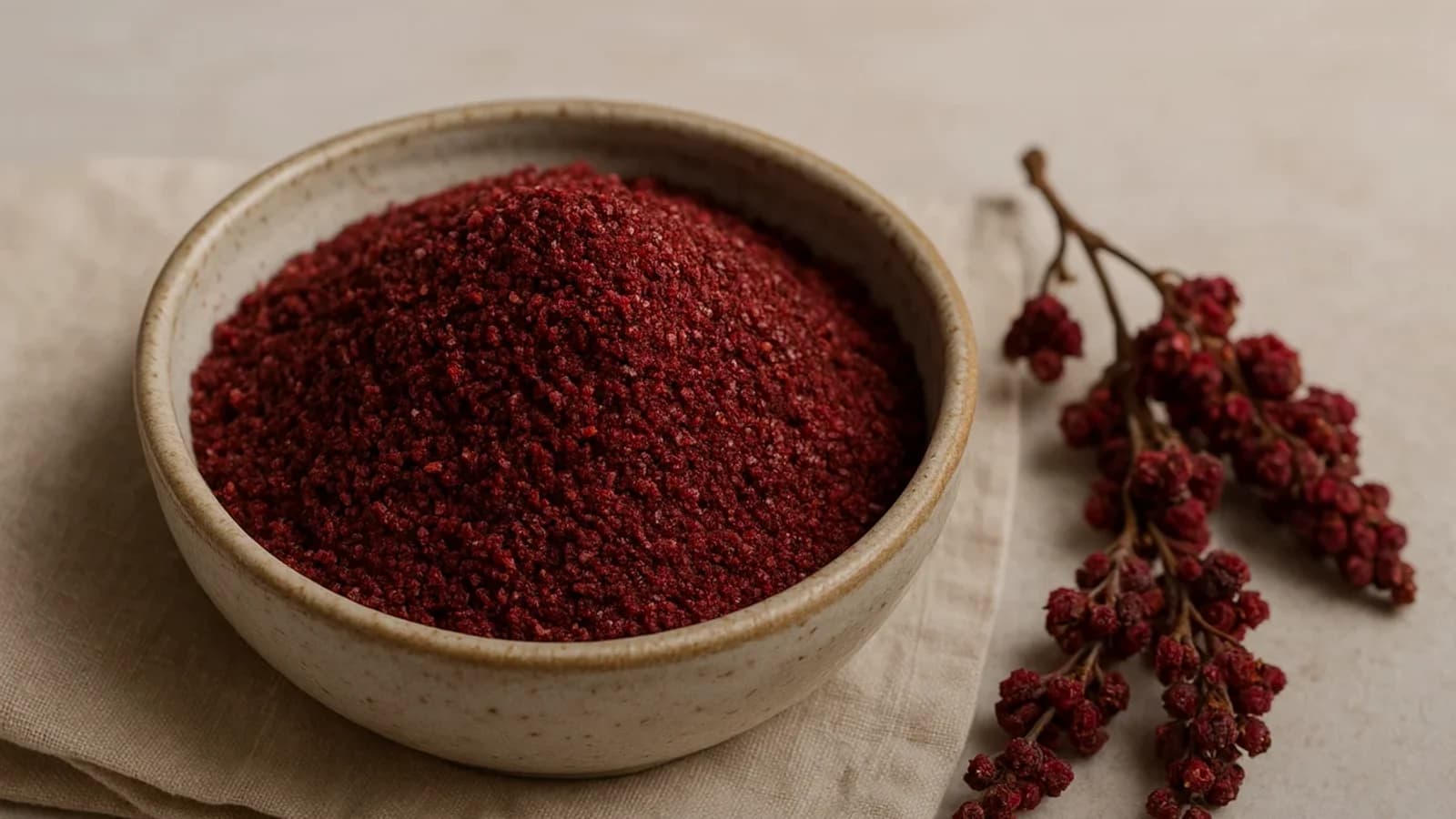
Sumac is one of the fastest ways to improve flavor without changing your entire recipe. It adds brightness and balance, especially when dishes taste rich or heavy. If you cook Mediterranean or Middle Eastern food at home in Lincoln, sumac is a high-value staple because it works across salads, proteins, dips, and grain bowls.
What sumac actually tastes like
Sumac is tangy and citrus-like, but it is not sour in the same way as lemon juice or vinegar. It gives dry acidity, which means you get brightness without adding extra liquid.
That makes sumac ideal for:
- crisping up creamy dips
- balancing fatty meats
- lifting grains and legumes
- finishing roasted vegetables
Think of it as a final seasoning layer that sharpens flavor.
Best dishes for everyday use
Salads and onion mixes
Sumac with sliced onion, parsley, and olive oil creates a fast garnish for wraps and grilled foods.
Dips and spreads
Sprinkle sumac over hummus or labneh with olive oil right before serving.
Grilled meats and chicken
Use in marinades with garlic, olive oil, and mild heat spices like Aleppo pepper.
Grain bowls and lentils
Add near the end for brightness in bulgur, rice, and lentil dishes.
Roasted vegetables
Finish potatoes, cauliflower, or eggplant with sumac after roasting.
How much should you use
Start light and build.
Practical amounts:
- 1/4 to 1/2 teaspoon for single servings
- 1 to 2 teaspoons for family-size dishes
- more only after tasting and balancing salt/fat
If food feels flat after adding sumac, you probably need salt or fat adjustment, not only more sumac.
Sumac pairings that perform well
High-value pantry pairings:
- zaatar
- cumin
- coriander
- dried mint
- garlic and olive oil
- yogurt and tahini sauces
For deeper blend planning, see Middle Eastern spices explained and What is zaatar.
Sumac vs lemon: when to use which
Use sumac when you want:
- dry finish
- minimal extra liquid
- better texture in dips and roasted items
Use lemon when you want:
- sharp fresh acidity
- marinade liquid
- more immediate citrus aroma
In many recipes, a small amount of both works better than either one alone.
Buying tips for Lincoln shoppers
If sumac is new to your kitchen, start with a small or medium bag and test it in three dish types:
- one salad or garnish
- one protein marinade
- one dip finish
If usage becomes weekly, move to medium or larger sizes.
Typical local price anchors:
- $2 to $4 for small packs
- $5 to $8 for medium bags
- up to about $12 for premium imports
Storage to preserve aroma
- keep sealed in an airtight container
- avoid direct sunlight and steam
- store away from stove heat
- label open date and rotate stock
If color and aroma fade heavily, replace. Old sumac still looks usable but contributes less flavor.
Practical weekly workflow
A reliable way to increase sumac usage:
- keep a pinch bowl near your prep zone
- add to one salad and one protein each week
- pair with yogurt or tahini sauce for consistency
- restock before seasonal demand spikes
This turns sumac from an occasional spice into a routine flavor tool.
Where to buy and what to combine in one trip
At Roj Market, sumac is commonly stocked with other regional staples and spice blends. For efficient shopping, pair sumac purchases with:
When used consistently, sumac is one of the simplest ingredients for improving weeknight meals without more prep time.
Common sumac mistakes to avoid
- Adding too much too early and losing freshness during long cooking.
- Using sumac as a heat spice instead of an acidity spice.
- Skipping fat or salt balance, then blaming sumac for flat flavor.
- Leaving bags unsealed near steam and expecting the same aroma later.
A good rule is to add sumac near the end, taste, then decide if the dish needs more brightness or more salt.
Simple meal ideas for one week
- Monday: sumac onion garnish over wraps
- Tuesday: lentil soup with sumac finish
- Wednesday: grilled chicken with sumac yogurt sauce
- Thursday: roasted potatoes + dried mint + sumac
- Friday: hummus board with olive oil and sumac
- Weekend: bulgur salad with parsley, lemon, and sumac
This pattern helps households turn one spice into multiple meals without repeating the same taste profile.
Sumac use cases by meal type
To make sumac a daily ingredient, map it to specific meal slots.
Breakfast
- eggs with olive oil and sumac
- labneh-style plate with cucumber and sumac
- avocado toast with sumac and lemon
Lunch
- chickpea salad with parsley and sumac
- grain bowl finished with sumac and mint
- wrap garnish with sumac onions
Dinner
- grilled chicken with sumac yogurt sauce
- roasted vegetable trays with sumac finishing dust
- lentil soup with final sumac sprinkle
When you assign sumac to meal slots, usage becomes automatic.
5 quick sumac formulas
Formula 1: Sumac onion garnish
- sliced onion
- parsley
- 1 tsp sumac
- olive oil
- pinch of salt
Formula 2: Sumac yogurt dip
- 1/2 cup yogurt
- 1/2 tsp sumac
- lemon squeeze
- garlic pinch
Formula 3: Sumac salad dressing
- olive oil
- lemon juice
- 1/2 tsp sumac
- salt + pepper
Formula 4: Sumac chicken marinade
- olive oil
- garlic
- 1 tsp sumac
- 1/2 tsp cumin
- lemon
Formula 5: Sumac potato finish
Roast potatoes as usual, then toss with sumac and olive oil at the end.
How to balance sumac in recipes
Sumac is brightness, not heat.
If a dish still tastes flat after adding sumac, check:
- salt level
- fat level (oil/yogurt/tahini)
- herb freshness
Most flavor problems are balance issues, not quantity issues.
Local shopping strategy in Lincoln
For most households, sumac is a medium-turn spice.
Shopping pattern:
- start with small-medium pack
- test across 3 dish categories
- move to larger size if weekly usage is stable
Pair sumac trips with high-overlap ingredients:
- chickpeas
- tahini
- olive oil
- parsley and lemon
This creates full meal capability instead of isolated spice purchases.
Sumac and seasonal cooking in Nebraska
Warmer months
Use sumac heavily in salads, grilled vegetables, and cold dips.
Cooler months
Use as a finishing layer for soups, braises, and oven-roasted meals.
This seasonal adaptation keeps the spice useful year-round.
Avoiding common buying mistakes
- buying premium large packs before testing flavor preference
- storing sumac in clear jars next to heat
- using only one dish style and calling the spice "limited"
Instead, keep a simple weekly target: use sumac in at least two different meals.
Internal links for better pantry results
Local Lincoln sumac shopping tip
If you are buying sumac for the first time, build a "sumac starter cart":
- sumac
- olive oil
- one grain
- chickpeas or lentils
- cucumber and parsley
This guarantees you can use sumac in at least 3 dishes immediately and avoid leaving the spice unused in your pantry.
Final note
If you want one small spice that creates big flavor change, sumac is usually the best first step. Use it in at least two meals each week and keep it near your serving area, not hidden in a back cabinet.
Local action step
Use this week to test sumac in three meals: one salad, one protein, and one grain dish. Track which version your household prefers and add it to your default weekly rotation.
Extra tip
For stronger results, add sumac as a finishing layer right before serving instead of during long cook times.