
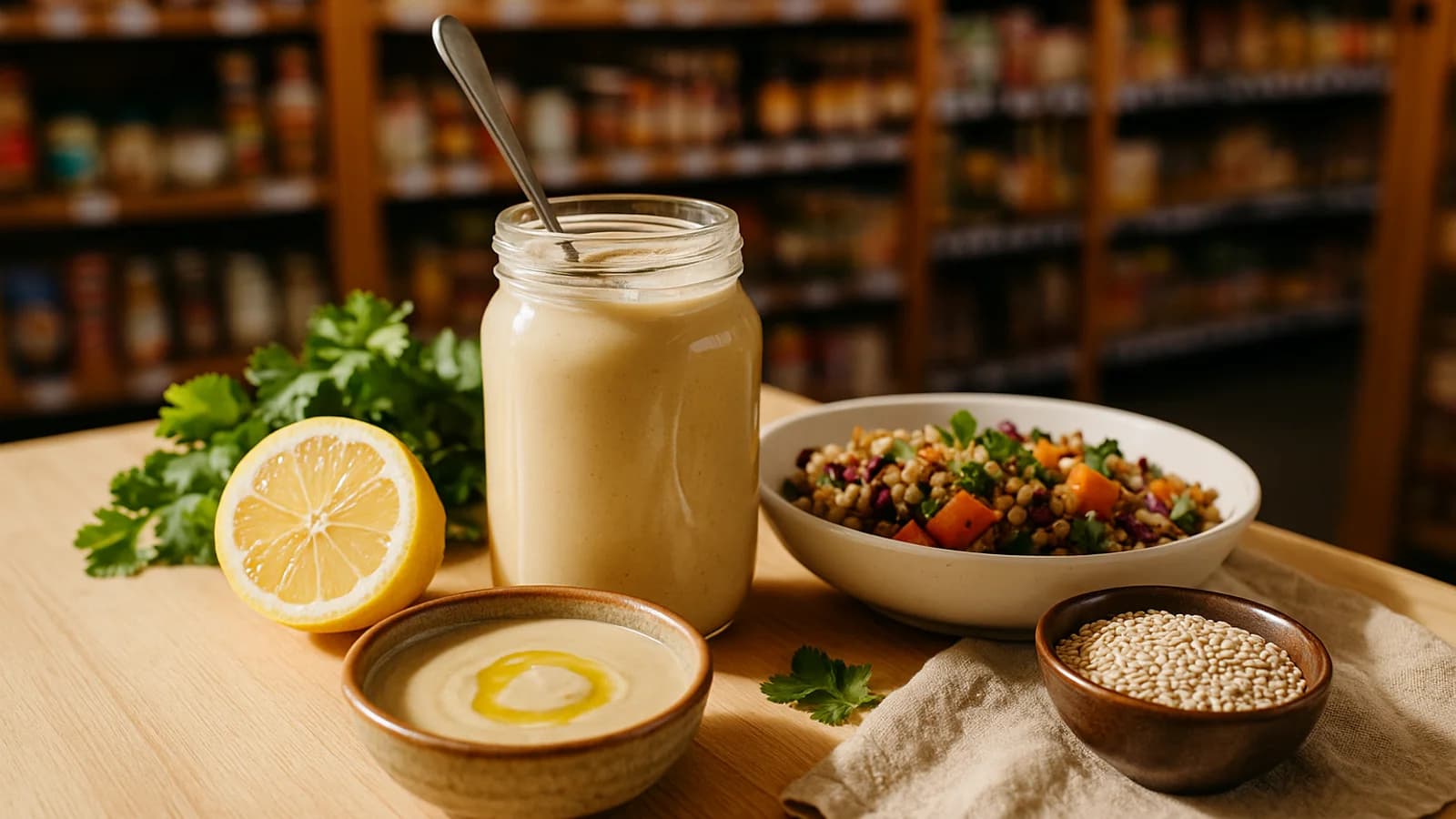
Tahini is one of the easiest pantry ingredients to underuse. Many cooks buy a jar for hummus, use a few spoonfuls, and let the rest sit in the back of the cabinet. The better approach is to treat tahini as a weekly-use ingredient for sauces, bowls, dressings, and simple desserts.
This guide focuses on the practical side of tahini: how it behaves, where it fits, and how to keep a jar in regular rotation.
What tahini adds to a dish
Tahini is useful because it brings several things at once:
- body for sauces and dressings
- nutty depth without dairy
- a base that pairs well with lemon, garlic, herbs, and warm spices
That is why it works across lunch, dinner, and snack-style meals.
The easiest ways to use tahini more often
Lemon-garlic sauce
This is the most versatile use. Whisk tahini with lemon juice, garlic, water, and salt until smooth. Spoon it over grain bowls, roasted vegetables, wraps, or grilled proteins.
Salad dressing
Tahini can replace bottled dressing with very little effort. Thin it with water and add lemon or vinegar, then season with salt and herbs.
Bowl or roasted vegetable finish
A small drizzle of tahini sauce can turn rice, chickpeas, cauliflower, or eggplant into a more complete meal.
Sandwich or wrap spread
Tahini works well as a spread when mixed with a little lemon, salt, and optional pomegranate molasses.
Sweet use
Tahini also pairs well with honey, dates, yogurt, and chocolate. A spoonful over toast, fruit, or yogurt is often enough.
A basic tahini sauce formula
Use this as a repeatable starting point:
- 3 tablespoons tahini
- 2 tablespoons lemon juice
- 3 to 5 tablespoons cold water
- 1 small garlic clove
- pinch of salt
Add the water slowly while whisking. Tahini often tightens first and then loosens into a smooth sauce.
How to fix common tahini problems
The sauce is too thick
Add cold water a little at a time and keep whisking.
The sauce tastes bitter
Try more lemon and a little salt before assuming the jar is unusable. Some brands also need more dilution than others.
The sauce separated
Whisk longer and add liquid gradually next time. Separation usually comes from adding too much water too quickly.
Oil separated in the jar
That is normal. Stir the jar thoroughly before using it.
What tahini pairs with best
Tahini is especially useful with:
- chickpeas and lentils
- roasted cauliflower, eggplant, and potatoes
- cucumber and tomato salads
- sumac, cumin, and coriander
- lemon and garlic
If you are building meals around tahini, related reads include How to use sumac in everyday cooking and What is zaatar?.
How much should you buy?
Buy based on how often you will actually use it:
- smaller jars make sense if you are still testing brands or only use tahini occasionally
- larger jars make more sense for weekly cooking, meal prep, or households that use tahini sauce regularly
The best size is the one you can finish while flavor and texture are still strong.
Storage basics
- Keep the jar tightly closed.
- Stir before each use.
- Store it in a cool cabinet unless the label says otherwise.
- Do not add water directly into the jar.
Keeping water out of the jar helps prevent waste and keeps the remaining tahini more stable.
A simple weekly tahini routine
If you want to use tahini consistently, keep the routine simple:
- Make one batch of sauce.
- Use it across two or three meals.
- Re-whisk with a little water or lemon if it thickens in storage.
This works better than saving tahini only for recipes that require many ingredients.
Final takeaway
Tahini is most useful when it becomes part of your default cooking, not an occasional specialty ingredient. A single jar can cover dressings, sauces, spreads, and quick sweet uses if you keep one reliable formula and use it repeatedly.
For pantry planning around tahini, browse the products catalog or compare broader staples on the Mediterranean grocery page.
Visit Roj Market in Lincoln
Need help planning a pantry restock? Use the Contact page.