
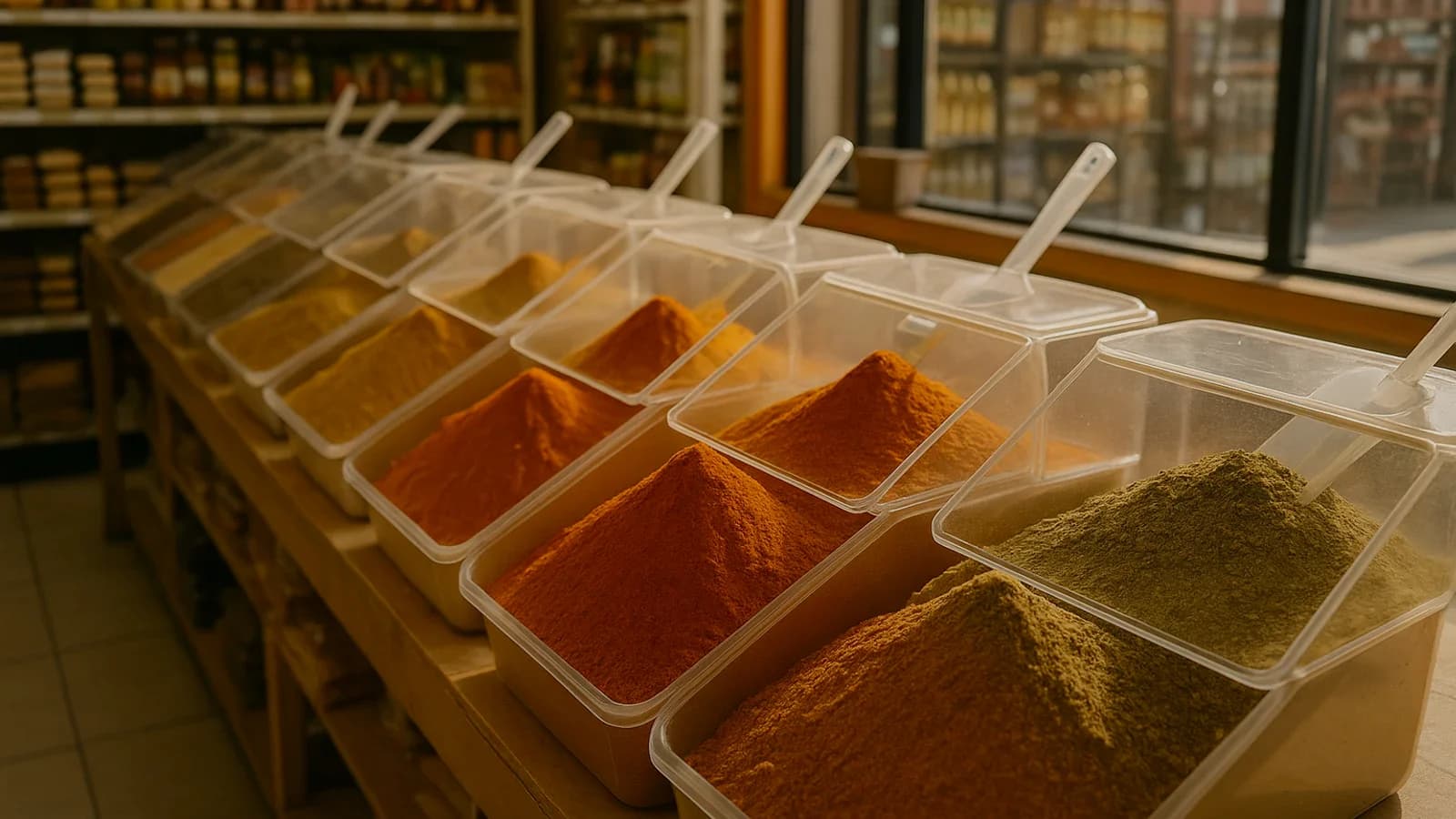
Middle Eastern spices are easier to use when you think about what each one does in a dish. Instead of buying every blend you see, build a small set that covers four jobs: depth, brightness, warmth, and finishing aroma.
This guide explains the most common spices in practical terms so you can shop and cook with more confidence.
Start with spice roles, not long ingredient lists
Most home cooks do better when they assign each spice a purpose:
- depth: cumin, coriander, turmeric
- brightness: sumac
- warmth: baharat, Aleppo pepper
- finishing aroma: zaatar, dried mint
Once you know the role, it becomes much easier to decide what a dish is missing and what to buy next.
The most useful spices to know
Cumin
Cumin is a foundational savory spice. It works especially well in lentils, chickpeas, soups, rice dishes, and roasted vegetables.
If you are building a first spice shelf, cumin is one of the safest places to start.
Coriander
Coriander adds a softer citrusy note that rounds out heavier dishes. It is often strongest when paired with cumin rather than used alone.
Use it in soups, marinades, rice dishes, and tomato-based cooking.
Sumac
Sumac brings tang without liquid. It is useful when a dish tastes heavy and needs brightness.
Use it on onion salads, dips, grain bowls, roasted vegetables, and grilled foods. For a more detailed guide, read How to use sumac in everyday cooking.
Zaatar
Zaatar is usually the easiest blend for beginners because it works on eggs, bread, vegetables, yogurt, and quick lunches.
It is best thought of as a finishing blend rather than a hot spice. For a dedicated breakdown, see What is zaatar?.
Aleppo pepper
Aleppo pepper gives gentle heat and a little sweetness. It is useful for marinades, eggs, soups, and roasted vegetables when you want warmth without the sharper bite of standard chili flakes.
Baharat
Baharat is a warm spice blend often used in rice dishes, stews, meat dishes, and stuffed vegetables. It is a good choice when you want a fuller, rounder flavor profile instead of brightness.
Turmeric
Turmeric adds color and an earthy base note. It is common in lentils, rice, soups, and braised dishes. It is usually more effective as part of a mix than as the dominant flavor.
Dried mint
Dried mint is an easy finishing ingredient for yogurt sauces, lentil dishes, soups, and salads. It is especially helpful when a dish needs lift but not more heat.
A beginner spice set that actually gets used
If you want one practical starter kit, buy:
- Cumin
- Coriander
- Sumac
- Zaatar
- Aleppo pepper or paprika
- Dried mint
That set is broad enough for weeknight cooking and small enough to stay fresh.
Simple pairing shortcuts
You do not need complicated formulas. These pairings cover many dishes:
- cumin + coriander for lentils, soups, and braises
- sumac + lemon for salads and finishing
- zaatar + olive oil for eggs, bread, and vegetables
- Aleppo pepper + garlic for marinades
- baharat + tomato paste for stews and rice dishes
If a dish tastes flat, add brightness before adding more heat.
How to choose pack sizes
Buy according to how often you cook with the spice:
- weekly use: medium or larger packs can make sense
- occasional use: small packs are usually better
- first-time purchase: start small, then scale up if it becomes part of your routine
If you want quantity and storage advice, that topic is covered more directly in Bulk spice buying guide for Lincoln home cooks. This article is meant to help you understand function first.
Storage basics
Spices last longer when they stay away from heat, light, and moisture.
- Keep them in airtight containers.
- Label the open date if you buy larger amounts.
- Store backup quantities away from the stove.
- Replace spices when the aroma is weak, not just when a date passes.
Common mistakes
Buying too many blends at once
A smaller set that you use well is more useful than a shelf full of unopened packets.
Reaching for heat when the dish needs brightness
Many dishes improve more from sumac, lemon, herbs, or salt than from extra chili.
Treating every dish the same
Breakfast, soups, roasted vegetables, and rice dishes often need different spice balances. Start with the dish type, then season toward it.
Final takeaway
A good spice shelf is not about variety for its own sake. It is about having a few dependable spices that solve common cooking problems.
Start with cumin, coriander, sumac, and zaatar. Add warmth and specialty spices only after those basics are in regular use.
Visit Roj Market in Lincoln
Need help finding spice basics in-store? Plan your trip on the Contact page.