
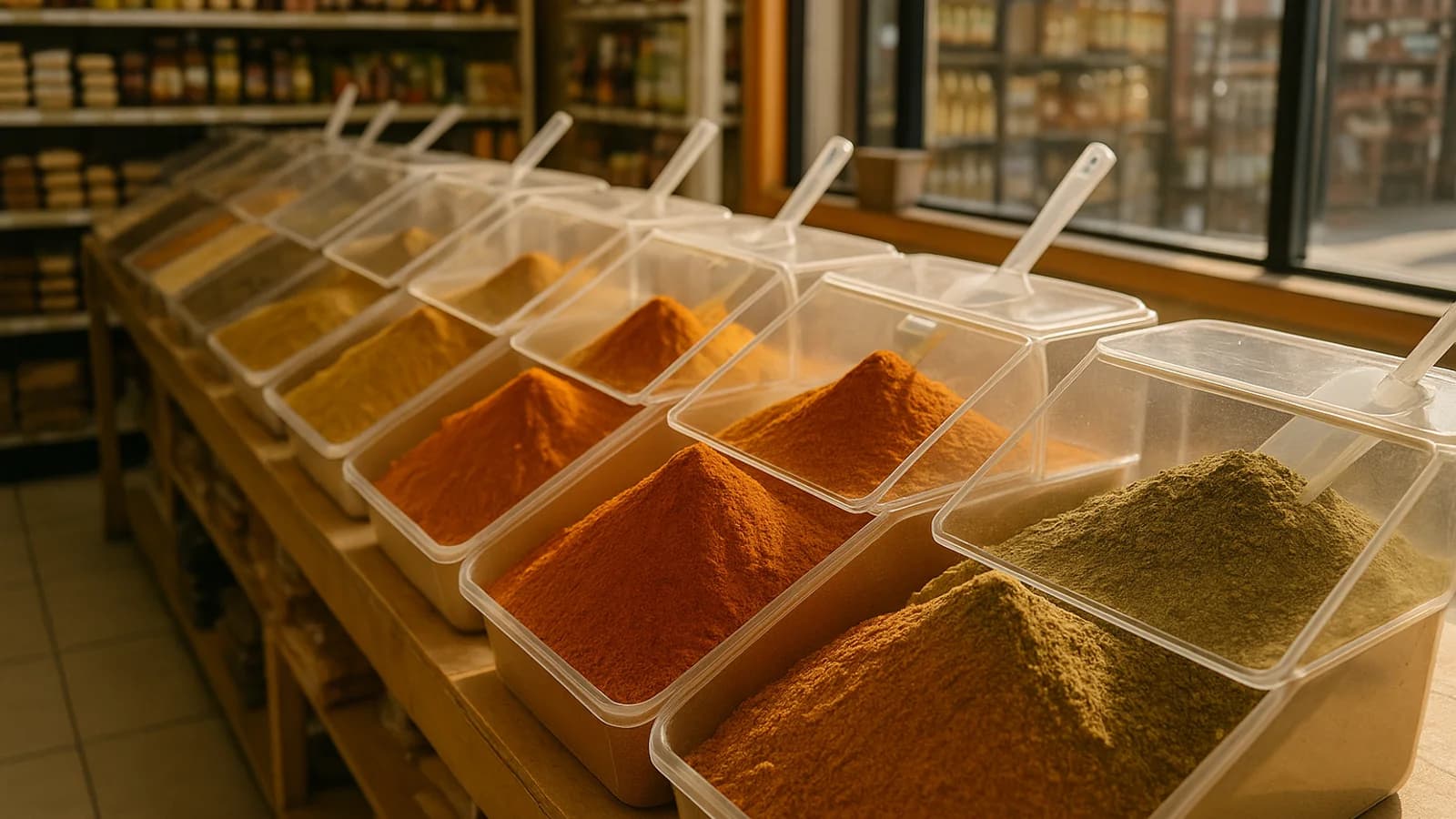
Buying spices in bulk can save money, but only if you match quantity to real cooking habits. Many households accidentally buy large bags because the price per ounce looks better, then lose value when flavor fades before the bag is finished. This guide is built for Lincoln home cooks who use Mediterranean and Middle Eastern ingredients weekly and want practical purchasing rules that actually work.
Why bulk spices can be a smart move
Bulk purchasing is most effective when you cook from scratch several times per week, feed a larger family, or prep for holidays like Ramadan and Eid. In those situations, medium and large sizes reduce repeat trips and improve pantry consistency.
At Roj Market, shoppers usually see three practical price tiers:
- $2 to $4 for small packs used for testing or low-frequency spices
- $5 to $8 for medium bags used in weekly cooking
- $8 to $12 for premium imported or larger-format options
The goal is not buying the biggest bag. The goal is buying the right bag for your next 60 to 90 days.
Use the 90-day quantity rule
Before you buy, estimate how much of each spice your household uses in three months:
- List your weekly dishes.
- Count how many recipes use each spice.
- Multiply weekly usage by 12.
- Buy near that total, not a full-year amount.
Example:
- If you use cumin in 3 meals per week at about 1 teaspoon each, that is about 36 teaspoons in 90 days, or roughly 3/4 cup.
- A medium bag usually covers this comfortably.
This method prevents overbuying and keeps aroma stronger.
Which spices should be small, medium, or bulk
Not every spice deserves a big bag. Split your purchase strategy by turnover.
Best bulk candidates for many Lincoln households:
- cumin (whole or ground)
- coriander
- dried mint
- Aleppo pepper
- zaatar for frequent breakfast or flatbread use
Usually better in small or medium packs:
- cardamom pods (unless you brew tea and coffee daily)
- mahlab
- mastic
- niche blends used only for specific holiday desserts
If you only use a spice once a month, a small pack is usually better value than a large discounted bag.
Freshness and storage rules that protect your money
Most spice waste comes from heat, light, and moisture, not from expiration dates alone.
Use these storage rules:
- Keep bulk spice in airtight containers immediately after opening.
- Store away from stove steam and direct sunlight.
- Label each jar with open date.
- Rotate oldest jars to the front first.
- Keep a small kitchen jar and refill from a sealed backup container.
If aroma drops sharply when you open a jar, flavor impact in food will also drop. Replace low-performing spices rather than adding extra spoonfuls.
Seasonal timing for Lincoln shoppers
Spice demand changes through the year. Buying schedule matters.
Typical demand spikes:
- Ramadan: stronger demand for lentils, rice, spice blends, tea, and dessert ingredients
- Eid lead-up: quicker movement on sweets and specialty pantry items
- Summer grilling season: higher turnover for marinades, Aleppo pepper, cumin, and dried herbs
If your household hosts often, buy core spices a little earlier in peak seasons to avoid substitute stress.
Build a reliable weekly spice kit
If you want one high-utility setup, keep these always stocked:
- cumin
- coriander
- sumac
- zaatar
- Aleppo pepper
- baharat
- dried mint
- black seed (nigella)
This kit supports soups, rice dishes, grilled proteins, roasted vegetables, dips, and breakfast plates.
For deeper pairing guidance, use the Middle Eastern spices page and Middle Eastern spices explained guide.
Bulk buying mistakes to avoid
The most common mistakes are predictable:
- buying by discount only, without usage planning
- trying too many unfamiliar blends at once
- storing open bags in warm cabinets near ovens
- skipping substitute planning when preferred brands are out
A better approach is to keep core spices stable, then test one new specialty item per trip.
Local shopping workflow that saves time
For faster trips:
- Start with your weekly meal plan.
- Refill only high-turnover spices first.
- Add one seasonal or specialty spice second.
- Check related staples in the same trip (bulgur, lentils, tahini, tomato paste).
If you are preparing for gatherings, combine this guide with:
Roj Market is open daily 9:00 AM to 10:00 PM, so you can spread larger pantry restocks over multiple visits instead of rushing one oversized trip.
Lincoln bulk spice quantity calculator (simple method)
Use this quick method before buying larger bags.
- Write your 10 most common meals.
- Mark which spices appear in each meal.
- Estimate teaspoons per week for each spice.
- Multiply by 12 for a 90-day target.
If a spice lands below roughly 20 teaspoons in 90 days, keep it in small format. If it lands above 30-40 teaspoons, medium or bulk usually makes sense.
Which spices are best for small, medium, and bulk formats
Small format (trial / low frequency)
- cardamom pods
- mahlab
- mastic
- specialty dessert spices
Medium format (steady weekly use)
- sumac
- zaatar
- Aleppo pepper
- dried mint
Bulk format (high-turn foundation)
- cumin
- coriander
- black pepper base blends
- core stew and rice blends for large households
This structure prevents the most common mistake: buying large bags of low-use spices.
Bulk buying for family-size and hosting households
If you cook for 5+ people or host often, spice turnover is naturally faster.
Use this pattern:
- keep one working jar in kitchen
- store backup in sealed pantry container
- refill working jar weekly
- check aroma every 2-3 weeks
This preserves flavor while still capturing bulk value.
Spice intensity map by dish type
Use this to choose where to invest more quantity.
- lentil soups: cumin + coriander (high usage)
- rice dishes: baharat + cumin (moderate-high)
- breakfast eggs: zaatar + Aleppo (moderate)
- salads and dips: sumac + dried mint (moderate)
- grilled proteins: Aleppo + cumin + garlic pairings (high during summer)
The higher the dish frequency, the more likely bulk pricing works in your favor.
Local timing strategy for Lincoln shoppers
To avoid stock pressure, schedule bulk spice trips around demand windows.
- early month: best for foundation restock
- 1-2 weeks before Ramadan/Eid: best for high-use spices
- weekdays before 4 PM: usually easier for larger carts
If you need exact imported brands, call before peak evening hours.
Storage system that protects bulk value
Bulk buying only works if storage quality is controlled.
Use these rules:
- move spice from bag to airtight jars immediately
- label jar with open date
- keep jars away from heat and direct light
- avoid shaking spice jars over steaming pots
- use dry spoon only
Moisture and heat are the top reasons bulk spices lose value.
8-week spice restock cycle
Week 1
refill cumin, coriander, and top-use blends
Week 2
audit finishing spices (sumac, zaatar, dried mint)
Week 3
test one new specialty spice only
Week 4
rotate and consolidate partial bags
Week 5-8
repeat using updated usage notes
This cycle keeps pantry lean and high-performing.
Local links for full planning
Bulk spice buying works best when quantity is tied to real cooking frequency. Use a repeatable system and your pantry stays cost-efficient, fresh, and easier to manage year-round.
Final bulk-spice checklist before checkout
Use this 60-second checklist in-store:
- Is this a 90-day quantity or a discount impulse?
- Do I have airtight storage ready at home?
- Is this spice part of at least two weekly recipes?
- Do I already have an open bag I should finish first?
- Do I have one backup substitution if this item is unavailable next trip?
If the answer to most questions is no, reduce quantity.
For local planning, pair this guide with:
This keeps your spice shelf lean, strong, and cost-efficient year-round.