
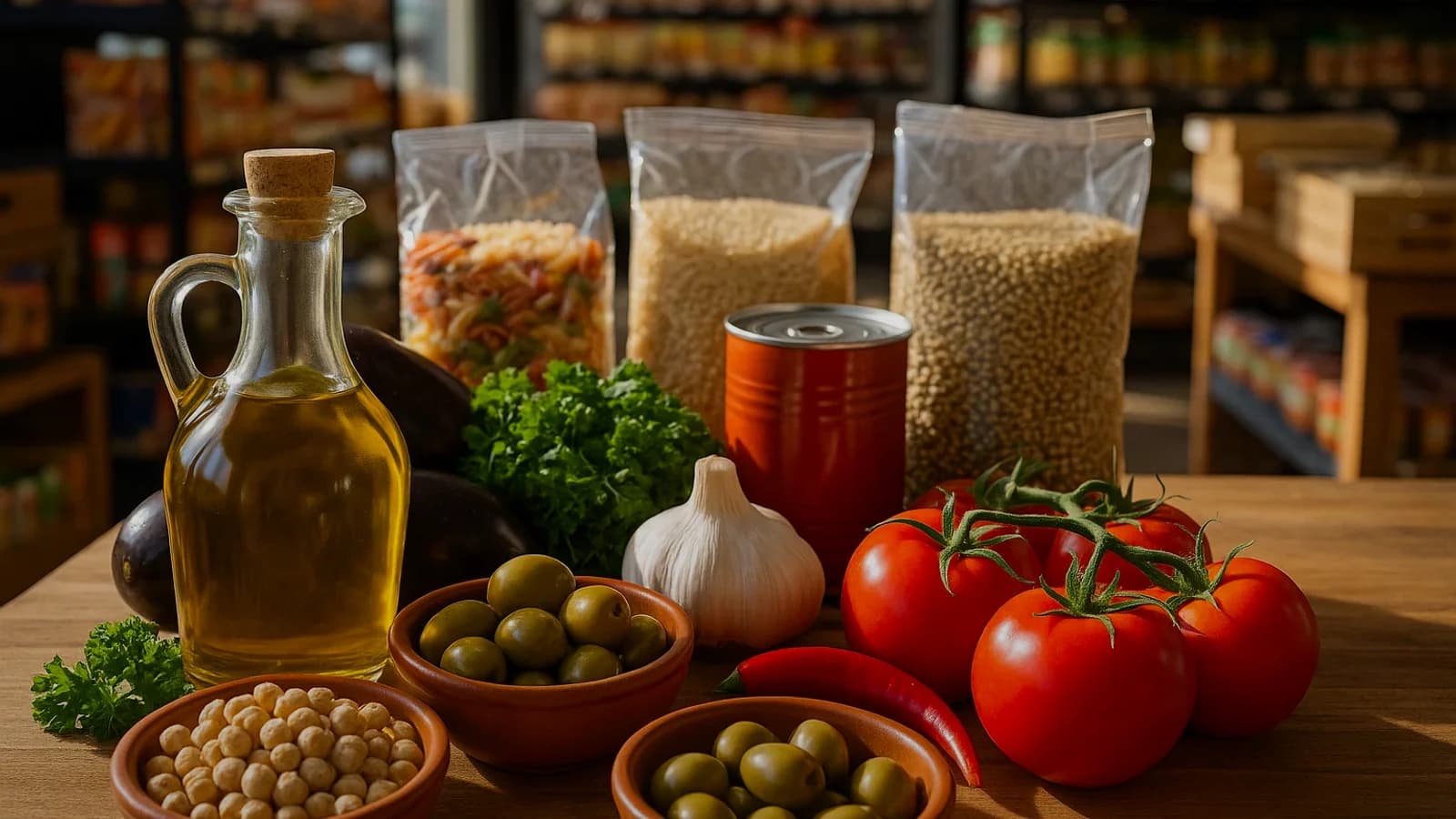
Interest in Mediterranean and Middle Eastern cooking has grown quickly in Lincoln, Nebraska. More households are cooking from scratch, building ingredient-focused pantries, and looking for authentic grocery options that go beyond a small international aisle.
The challenge is not motivation. The challenge is access and clarity.
Most people are trying to answer practical questions:
- What pantry ingredients are essential?
- Which items overlap across many recipes?
- How do Mediterranean and Middle Eastern shopping lists differ?
- Where can I buy these ingredients locally without making multiple trips?
This guide is built to answer those questions with a local Lincoln focus.
Why this guide matters for Lincoln shoppers
If you rely only on broad supermarkets, you can still cook basic versions of many dishes. But consistency, flavor accuracy, and meal planning become harder when ingredient depth is low.
A stronger local workflow comes from:
- understanding which ingredients are foundational
- knowing how to shop categories in the right order
- using a store with authentic brand depth and practical restocking
That is where specialty grocery structure matters.
Mediterranean and Middle Eastern overlap: what is shared and what is different
These cuisines overlap heavily, but they are not identical.
Shared foundation categories
Both styles rely on:
- grains and legumes
- olive oil and tomato products
- herbs and spice layering
- shared-meal formats
- pantry-first cooking systems
Key emphasis differences
Mediterranean-focused cooking often emphasizes:
- olive-oil-forward flavor
- acidity and herb brightness
- lighter seasoning balance
Middle Eastern-focused cooking often emphasizes:
- deeper spice layering
- stronger use of blends and aromatics
- grain-based and lentil-based meal patterns
In practice, households in Lincoln usually cook from both traditions. The most useful pantry is one that supports crossover cooking.
Pantry building basics for Lincoln households
If you are starting from zero, build in phases.
Phase 1: Non-negotiable core
Start with these categories first:
- rice (basmati or jasmine)
- lentils (red plus one hold-shape variety)
- chickpeas
- bulgur (fine or coarse)
- olive oil
- tomato paste
- tahini
- cumin
- sumac
- zaatar
This base supports soups, bowls, salads, dips, braises, and quick weeknight meals.
Phase 2: Depth and flexibility
After your core shelf is stable, add:
- fava beans
- grape leaves
- pomegranate molasses
- Aleppo pepper
- baharat
- tea and coffee staples
- imported snack items for hosting
Phase 3: Hosting and seasonal expansion
For larger gatherings or Ramadan periods, add:
- dates
- dessert ingredients
- high-volume rice and lentil packs
- table-service items
Why category depth matters more than single-item availability
Many stores can say they carry one item in a category. That does not solve real cooking needs.
Example:
- one lentil type is not enough for all dish textures
- one rice type is not enough for all meal styles
- one generic spice blend is not enough for regional flavor accuracy
A practical specialty grocery in Lincoln should offer multiple relevant options in high-use categories so households can cook with fewer substitutions.
Ingredient quality checkpoints that improve outcomes
You do not need to be an expert to shop better. Use simple checkpoints.
Spices
Check aroma first. If aroma is weak, flavor impact will be weak.
Grains and legumes
Check package integrity and freshness date for predictable cook performance.
Oils and sauces
Choose sizes that match your weekly usage to reduce waste.
Imported products
For brand-specific needs, call ahead during high-demand periods.
A one-trip shopping framework that actually works
For faster shopping in Lincoln, use this order:
- core pantry staples
- meal-specific proteins and produce
- spice and sauce refinements
- hosting extras and snacks
This keeps carts focused and prevents missing essential items.
If you are planning a larger cart, use a two-list approach:
- list A: must-have ingredients
- list B: optional brands and exploratory items
Seasonal planning: Ramadan and high-demand periods
During Ramadan and major holidays, demand shifts quickly.
High-velocity categories usually include:
- dates
- rice
- lentils
- oils
- tea and sweets
- dessert prep ingredients
A practical strategy is to split purchases.
Early cart
Secure foundations first (grains, legumes, oils, core spices).
Later cart
Buy short-window and hosting items closer to gatherings.
This reduces out-of-stock risk and helps budget control.
Building a complete local cluster in Lincoln
If your goal is better ranking and better user navigation, blog content should connect tightly to local authority pages and product pages.
Use this internal structure:
- primary local page: Middle Eastern grocery store in Lincoln
- Mediterranean intent page: Mediterranean grocery in Lincoln
- Halal-friendly intent page: Halal-friendly grocery in Lincoln
- Turkish category page: Turkish products in Lincoln
- spice category page: Middle Eastern spices in Lincoln
- imported snack category page: Imported snacks in Lincoln
- broad category page: International grocery in Lincoln
Then connect blogs to products and vice versa.
This structure improves topical clarity for both users and search engines.
High-impact pantry combinations for beginners
If you are new to these cuisines, choose combinations that create multiple meals with minimal extra shopping.
Combo 1: Soup and bowl base
- red lentils
- rice or bulgur
- tomato paste
- cumin and sumac
Combo 2: Dip and salad base
- chickpeas
- tahini
- lemon
- olive oil
- zaatar
Combo 3: Quick tray meal base
- potatoes or cauliflower
- olive oil
- spice blend
- yogurt
These patterns reduce decision fatigue and increase repeat cooking success.
Common mistakes and how to avoid them
Mistake 1: Buying isolated ingredients
Fix: buy ingredient sets that work together, not single novelty items.
Mistake 2: Ignoring texture requirements
Fix: choose the right grain cut and lentil type for the recipe.
Mistake 3: Overbuying spices
Fix: match spice quantity to your real cooking frequency.
Mistake 4: No substitute plan
Fix: maintain one approved backup brand for key categories.
Mistake 5: Shopping at peak windows for large carts
Fix: shop earlier in the day when possible and call ahead for critical items.
Practical weekly meal blueprint
Use a simple rotation built on overlapping pantry staples.
Day 1
Lentil soup + salad with sumac
Day 2
Rice bowl with seasoned chickpeas + yogurt sauce
Day 3
Roasted vegetables + tahini drizzle + flatbread
Day 4
Bulgur-based side + protein and herb salad
Day 5
Quick tomato and spice braise over rice
Day 6
Tea-time spread with biscuits and light savory snacks
Day 7
Pantry reset and prep for next week
This pattern keeps shopping predictable and prevents unused pantry buildup.
Where to shop in Lincoln
If you want practical pantry depth for Mediterranean and Middle Eastern cooking, visit:
Roj Market
4640 Bair Ave Suite 214
Lincoln, NE 68504
Open daily: 9:00 AM to 10:00 PM
(402) 261-3588
For next steps, use these pages:
Cooking success starts with the right ingredient system. Build the pantry once, shop it consistently, and your weekly meals become easier, faster, and more authentic.
Aisle-by-aisle shopping checklist for Lincoln households
If your grocery trips feel scattered, use this aisle order to build complete carts with fewer missed items.
Aisle 1: grains and legumes
Start with high-frequency staples:
- rice
- bulgur
- lentils
- chickpeas
- beans
These ingredients form the meal base and should be secured first.
Aisle 2: oils, sauces, and cooking support
Add:
- olive oil
- tomato paste
- tahini
- pomegranate molasses
- canned essentials
These categories turn base ingredients into full meals.
Aisle 3: spices and blends
Then select:
- cumin
- sumac
- zaatar
- paprika or Aleppo pepper
- baharat and related blends
Spices should be chosen for planned recipes, not shelf appearance.
Aisle 4: produce and fresh complements
Add herbs and vegetables to match your plan:
- parsley
- mint
- cucumber
- tomato
- onion
- lemon
Fresh elements are often the difference between a heavy dish and a balanced dish.
Aisle 5: hosting and optional categories
Finish with:
- tea and coffee items
- imported snacks
- sweets and gifting items
By placing optional categories last, you protect budget and list discipline.
Product substitution framework when inventory rotates
Even strong specialty stores can have shipment variation. The goal is not avoiding substitutions entirely. The goal is substituting intelligently.
Substitution rules
- keep function first (texture, acidity, heat, or body)
- match intensity second
- adjust quantity only after tasting
Practical examples
- no preferred tahini: choose similar sesame profile and adjust lemon/water ratio
- no preferred lentil size: use nearest type and adapt cooking time
- no exact spice blend: combine base spices for the same flavor direction
This framework keeps meal outcomes stable even when one product changes.
Four shopper profiles and how to build their carts
Profile 1: Beginner home cook
Goal: high success with low complexity.
Cart pattern:
- rice
- lentils
- chickpeas
- tomato paste
- olive oil
- zaatar and cumin
Profile 2: Budget-focused family
Goal: maximize servings per dollar.
Cart pattern:
- larger grain and legume quantities
- core spice refills only
- fewer novelty items
- flexible produce based on price and freshness
Profile 3: Weekly meal prep household
Goal: repeatable overlap across meals.
Cart pattern:
- two grains
- two legumes
- one sauce base
- one yogurt or tahini category
- three versatile spices
Profile 4: Hosting and holiday shopper
Goal: table readiness and guest-friendly variety.
Cart pattern:
- foundational staples first
- tea and sweets second
- snack and dessert categories last
- call-ahead checks for higher-volume needs
Monthly pantry maintenance for better long-term results
Use a monthly cycle to keep inventory useful.
Week 1
audit staples and refill core items.
Week 2
refresh spice shelf and remove stale stock.
Week 3
focus on produce-heavy and lighter meals to balance pantry use.
Week 4
plan next month list from actual usage, not guesses.
This method reduces overbuying and improves budget control.
Internal link architecture for stronger topical authority
For site structure and SEO cluster strength, this pillar should support and be supported by:
- Middle Eastern market page
- Mediterranean grocery page
- Halal-friendly grocery page
- Turkish products page
- Middle Eastern spices page
- Imported snacks page
- International grocery page
- Product hub
Then connect relevant sub-guides:
- Where to buy halal groceries in Lincoln
- What is zaatar and how to use it
- How to use sumac in everyday cooking
- Imported snack guide
This interlinking pattern helps users navigate by intent and helps search engines understand topical relationships.
Final action plan for Lincoln shoppers
If you want better results this month, follow this exact sequence:
- Build a core pantry list from this guide.
- Shop by aisle order, not by impulse.
- Keep one approved substitute for each key category.
- Call ahead for brand-specific or high-demand items.
- Review what you used at month-end and refine your next list.
Small process changes create the biggest long-term gains in cost control, meal quality, and shopping speed.