
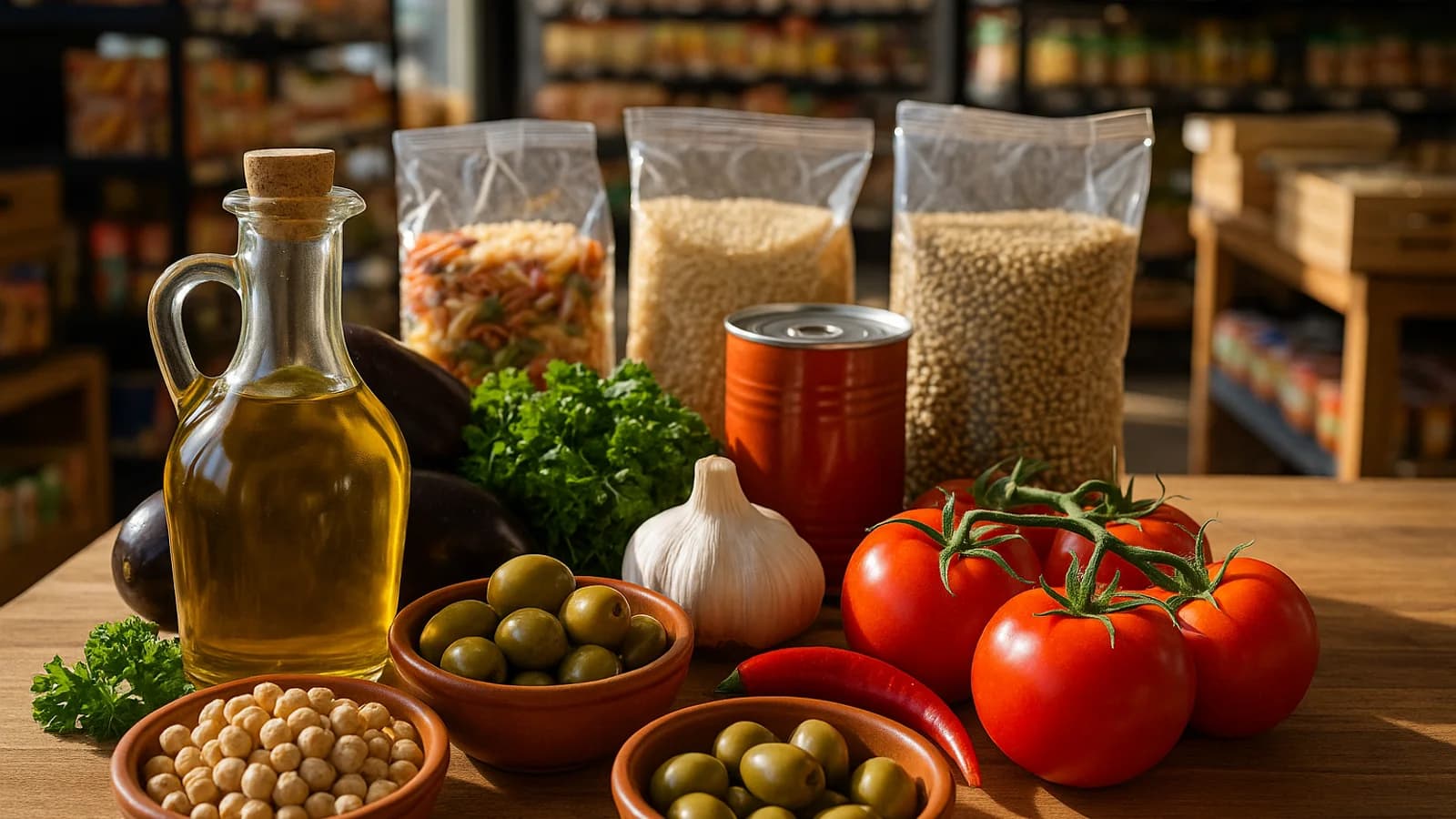
A useful Mediterranean pantry is built around ingredients you will reach for every week, not a long list of one-off specialty items. If you want a pantry that supports soups, grain bowls, salads, trays of roasted vegetables, and quick breakfasts, start with a small group of staples that work across all of them.
This guide focuses on the ingredients that give Lincoln home cooks the most flexibility with the least waste.
The core ingredients worth buying first
If your pantry is mostly empty, these are the best first purchases:
- Rice
- Bulgur
- Red lentils
- Chickpeas
- Olive oil
- Tomato paste
- Tahini
- Cumin
- Coriander
- Sumac
- Zaatar
- Dried mint or parsley
That list is enough to build many everyday meals without making your shopping trip too expensive or too complicated.
Why these ingredients matter
Grains and legumes give you structure
Rice, bulgur, lentils, and chickpeas are the backbone of a practical pantry. They store well, stretch a budget, and cover multiple meal types.
- Rice works for bowls, sides, and meal prep.
- Bulgur cooks quickly and is useful in pilafs, salads, and stuffed-dish fillings.
- Red lentils make fast soups and stews.
- Chickpeas work in salads, braises, mash-style dishes, and quick lunches.
If you only buy two items at first, make them one grain and one legume.
Olive oil, tomato paste, and tahini build flavor fast
These three ingredients do a lot of work in Mediterranean cooking.
- Olive oil adds richness and helps carry herbs and spices.
- Tomato paste gives depth to soups, rice dishes, and braised vegetables.
- Tahini turns simple bowls, wraps, and roasted vegetables into fuller meals.
If you already keep grains on hand, these are the ingredients that make those grains taste intentional instead of plain.
A small spice shelf is enough to start well
You do not need a cabinet full of spices. A compact set is more useful:
- cumin for savory depth
- coriander for balance
- sumac for brightness
- zaatar for quick finishing
- dried mint for soups, yogurt sauces, and salads
For a more detailed breakdown of how each spice works, see Middle Eastern spices explained, What is zaatar?, and How to use sumac in everyday cooking.
Build your pantry by meal pattern, not by recipe
The easiest way to avoid waste is to shop for repeatable meal patterns.
Pattern 1: Soup, grain, and salad
Use lentils or chickpeas, rice or bulgur, and a bright finishing element like lemon or sumac.
Pattern 2: Roasted vegetables and sauce
Use olive oil, cumin or zaatar, and a tahini or yogurt-based sauce.
Pattern 3: Breakfast or light lunch plate
Use eggs, bread, olives or vegetables, and a quick seasoning such as zaatar or dried mint.
When a pantry supports patterns like these, it becomes much easier to plan meals from what you already have.
How much to buy
A simple quantity system keeps waste down:
- Buy larger amounts of ingredients you use every week, such as rice, lentils, and chickpeas.
- Buy medium sizes of olive oil, tahini, and tomato paste if they are regular staples in your kitchen.
- Buy smaller packs of finishing spices until you know how fast you use them.
If you cook with one spice only occasionally, the lowest shelf price is not always the best value. Freshness matters more than volume.
What to do if your budget is limited
If you can only buy a few Mediterranean staples on this trip, start here:
- Rice
- Red lentils
- Chickpeas
- Olive oil
- Tomato paste
- Cumin
That short list still gives you a strong base for soups, bowls, simple braises, and meal prep. Add tahini, sumac, and zaatar once you know you will use them.
A practical shopping workflow in Lincoln
For a smoother trip, shop in this order:
- Grains and legumes
- Oils, sauces, and tomato products
- Spices and herbs
- Fresh produce and finishing items
- Snacks and hosting extras
This sequence helps you cover the pantry basics first and keeps optional items from crowding out essentials.
If you want to compare broader local shopping categories, use the Mediterranean grocery page, the Middle Eastern market page, and the main products catalog.
Common mistakes
Buying too many specialty items too early
A pantry becomes more useful when you repeat the same high-utility staples before expanding into niche ingredients.
Shopping for one recipe at a time
Recipe-specific trips often leave you with half-used jars and not enough overlap for next week.
Ignoring finishing ingredients
Meals usually taste flat not because they need more bulk ingredients, but because they need brightness, herbs, or a better sauce.
Final takeaway
The best Mediterranean pantry is not the largest one. It is the one that helps you cook good food repeatedly with minimal waste.
Start with a grain, a legume, a few core sauces, and a short spice shelf. Once those staples are in regular rotation, every later purchase becomes easier to justify and easier to use.
Visit Roj Market in Lincoln
Need help finding pantry basics in-store? Plan your trip on the Contact page.