
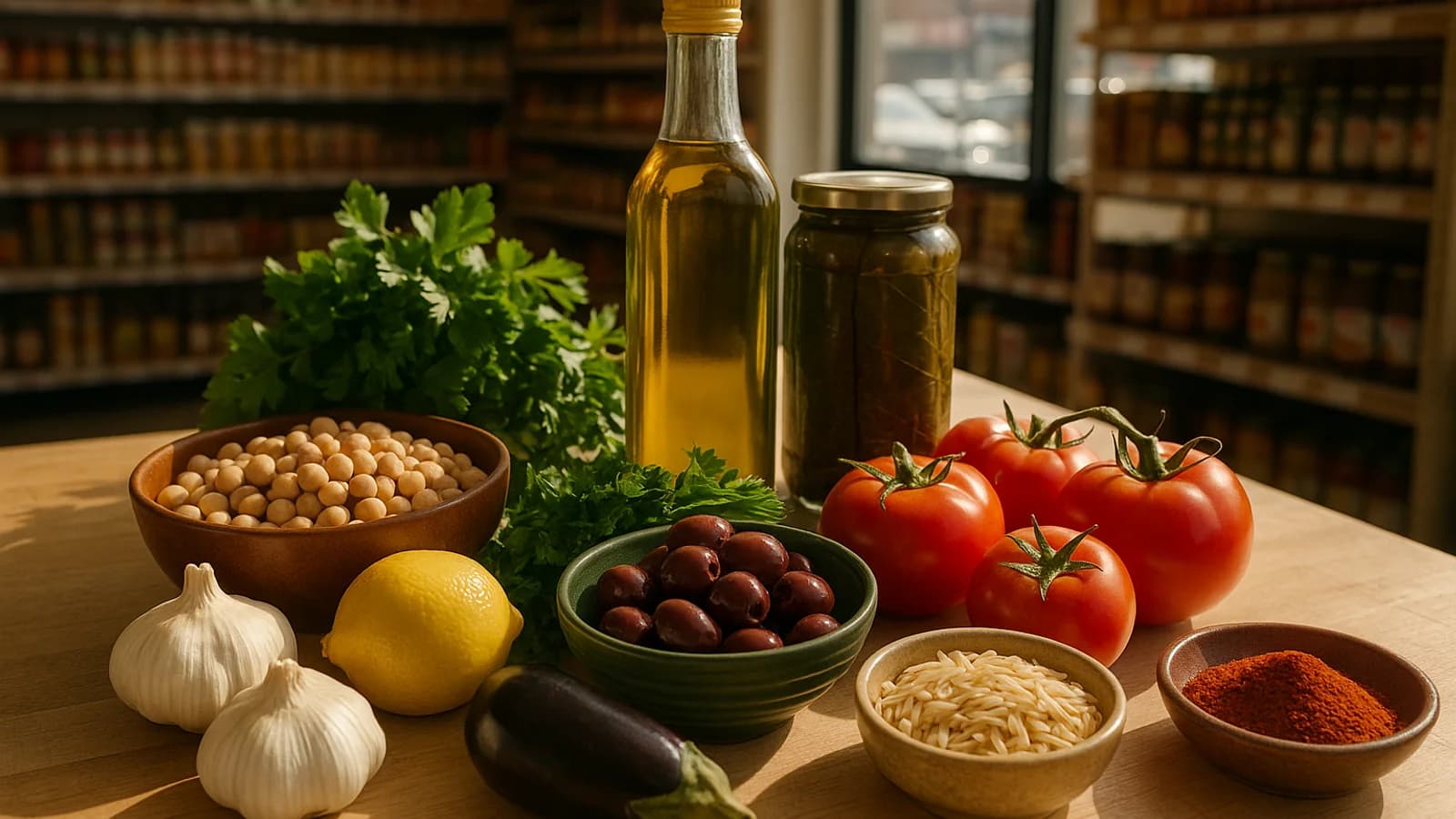
If you want to cook Mediterranean food consistently in Lincoln, the most important decision is not one recipe. It is your pantry structure.
Most people try Mediterranean cooking by buying a few random ingredients, using them once, then letting them sit. A stronger approach is to build a reusable ingredient system that works for weeknight meals, weekend hosting, and seasonal cooking.
This guide covers the top Mediterranean ingredients every Lincoln household should stock, how to buy them in practical quantities, and how to connect them into real meal patterns.
Why pantry design matters more than recipe collecting
Recipe collections are useful, but grocery reality is different. Week to week, households need ingredients that overlap across many dishes.
A strong Mediterranean pantry should do four things:
- support multiple meal types from one cart
- keep flavor quality high with minimal waste
- reduce emergency shopping trips
- make it easy to cook healthier meals at home
When your pantry is built around high-utility ingredients, cooking gets easier and cheaper over time.
The top Mediterranean ingredient categories
1. Grains that form meal structure
Mediterranean meals often start with grains, especially for family-scale cooking.
High-value staples:
- basmati rice
- jasmine rice
- bulgur (fine and coarse)
Why they matter:
- they carry sauces and spice profiles well
- they work in bowls, pilafs, sides, and salads
- they store well and support budget consistency
2. Legumes for protein and texture
Legumes are one of the most cost-effective protein categories in Mediterranean cooking.
Core options:
- red lentils
- brown or green lentils
- chickpeas
- fava beans
These ingredients support soups, stews, spreads, salads, and vegetarian mains.
3. Core sauce and body ingredients
A pantry without sauce bases usually produces dry or flat meals.
Top picks:
- tahini
- tomato paste
- olive oil
- yogurt-compatible pairings
These create rich texture and flavor depth with minimal prep.
4. Essential Mediterranean spice and herb layer
Spice quality determines whether meals taste balanced or generic.
Start with:
- cumin
- coriander
- sumac
- zaatar
- dried mint
- Aleppo pepper (optional heat)
These six categories can flavor dozens of weekly dishes.
5. Acid and freshness supports
Mediterranean cooking relies on brightness as much as richness.
Keep these available:
- lemon
- vinegar or pomegranate molasses
- parsley and mint (when available)
Acidity and herbs correct heavy flavors and improve balance quickly.
6. Tea, snacks, and hosting extras
For many households, pantry planning also includes table culture and hospitality.
Useful categories:
- black tea
- biscuits or light sweets
- nuts and seeds
These items support tea-time, guests, and family gathering routines.
Pantry starter list (first 14 ingredients)
If you are starting from scratch in Lincoln, begin with these:
- rice
- bulgur
- red lentils
- chickpeas
- fava beans
- olive oil
- tahini
- tomato paste
- cumin
- coriander
- sumac
- zaatar
- dried mint
- lemon
This list is enough to build soup, bowl, salad, dip, and tray-meal patterns without complicated shopping.
Ingredient role matrix: how to think like a practical shopper
Give each ingredient a role so it earns its place.
- structure: rice, bulgur
- protein base: lentils, chickpeas, fava
- richness: olive oil, tahini
- depth: tomato paste, cumin, coriander
- brightness: sumac, lemon
- aroma finish: zaatar, mint
When every ingredient has a role, your pantry avoids clutter and supports consistent meal quality.
Weekly Mediterranean meal system from one pantry
Use a repeatable five-day framework.
Day 1
Red lentil soup + olive oil + sumac onion finish
Day 2
Rice bowl with chickpeas, cucumber salad, tahini sauce
Day 3
Bulgur pilaf + roasted vegetables + yogurt or tahini drizzle
Day 4
Tomato-braised beans over rice with mint finish
Day 5
Zaatar eggs + bread + side salad
This one pattern can be repeated with small ingredient swaps to create variety.
Quantity strategy for Lincoln households
Not every ingredient should be bought in bulk.
Larger formats (high turnover)
- rice
- lentils
- chickpeas
- tea
Medium formats (steady use)
- tahini
- tomato paste
- cumin and coriander
Smaller formats (accent use)
- sumac
- zaatar (unless daily use)
- specialty blends
This tier model helps control waste and cash flow.
Budget planning by category
Use category bands instead of fixed item prices.
- 55-65%: foundation staples
- 20-30%: flavor and sauce support
- 10-20%: hosting and optional items
If budget pressure increases, trim optional items first. Keep core staples stable.
Local Lincoln shopping workflow
For efficient trips, follow this order:
- grains and legumes
- oil, tahini, tomato base
- spice and herb shelf
- produce and freshness add-ons
- snacks and hosting extras
This sequence protects essentials before optional categories.
If you need exact imported brands, call ahead during peak demand periods.
Seasonal adaptation in Nebraska
Spring and summer
Focus more on salads, herbs, lemon, and lighter grain bowls.
Fall and winter
Use more soups, stews, warm spice layering, and tray meals.
Your pantry can stay mostly the same. Only meal style shifts by season.
Common mistakes and fixes
Mistake 1: Buying isolated ingredients
Fix: buy connected ingredient sets that create full meals.
Mistake 2: Too many spices too quickly
Fix: stabilize with 5-6 core spices first.
Mistake 3: Ignoring grain texture needs
Fix: keep at least two grain formats (e.g., rice + bulgur).
Mistake 4: No backup options
Fix: choose one substitute brand per key category.
Mistake 5: Shopping all categories at peak times
Fix: split large trips or shop earlier in the day.
Two-cart strategy for month planning
Cart A (month foundation)
- grains
- legumes
- oil
- tomato base
- core spices
Cart B (week-to-week refresh)
- produce
- tea/snack rotation
- hosting extras
- specialty items
This method reduces full-cart stress and keeps pantry coverage stable.
Quick pantry quality checks
Run this check every two weeks:
- smell core spices for potency
- inspect grain containers for moisture risk
- stir tahini and reseal cleanly
- move older products to front
- plan one meal to use near-expiry items
A 5-minute audit saves more than any single discount.
Beginner shopping basket (one-trip version)
If you want one practical first basket in Lincoln:
- 5 lb rice
- red lentils
- chickpeas
- tahini jar
- tomato paste
- olive oil
- cumin
- sumac
- zaatar
- lemon
With this basket, you can cook a full week of Mediterranean-style meals.
Hosting basket (family and guest version)
For social meals and tea service:
- larger tea pack
- olive and cheese pairings
- biscuits or sweets
- extra rice and legumes
- one backup spice blend
This keeps the table flexible and avoids last-minute shortage pressure.
Internal links for complete planning
Use these pages with this guide:
- Mediterranean grocery in Lincoln
- Middle Eastern market page
- Middle Eastern spices page
- Products hub
- Best Mediterranean ingredients guide
- Cooking with tahini guide
Final takeaway
The best Mediterranean pantry is not the largest pantry. It is the one you can use every week without confusion.
When Lincoln households stock the right grains, legumes, sauce bases, spices, and freshness supports, meal planning gets faster, flavor improves, and grocery trips become simpler.
Build the system once, then refine it monthly. That is the fastest path to reliable Mediterranean cooking at home.
Practical monthly review question
At the end of each month, ask one question: "Which ingredients did we use at least four times?" Keep those in the core list and downgrade low-use items to occasional purchases. This single review improves pantry efficiency faster than any one-time shopping overhaul.
Final note
A Mediterranean pantry performs best when ingredients have clear jobs. Review monthly usage, reinforce top-performing items, and remove low-use extras so your grocery system stays simple and effective.
Visit Roj Market in Lincoln
Need help finding this in-store? Call to check stock at (402) 261-3588 or plan your trip on our Contact page.